

I am going to share something that has intrigued me over the last several years I used to feel frustrated when certain things happened during Airline ticket reservations, or after it was done. I thought it was a scam outright and was cursing the Airlines for gouging me.
Later as I started reading articles on this topic, I started understand that there are algorithms that drive the reservation mechanism and more importantly the price structure.
What are Airline Pricing Algorithms?
Airline pricing algorithms are complex systems airlines use to set ticket prices. These algorithms rely on dynamic pricing, adjusting fares based on supply, demand, competition, and other factors. Here’s a breakdown of how they work:
🕰️ 1. Dynamic Pricing
Prices change based on how many seats are left, how close the flight date is, and historical booking patterns.
Airlines use yield management to maximize revenue by selling the right seat to the right customer at the right price.
🤓My observation: I have seen this happen but did not understand it earlier. Also, I was not sure about “how many seats are left”. It may know one thing but tells me something else. I will touch on that aspect later below
📊 2. Fare Buckets (Booking Classes)
Airlines divide seats into different price categories or fare buckets.
As lower-priced fare buckets sell out, only higher-priced ones remain.
Example: Economy might have tickets at $100, $150, and $200, depending on availability.
✈️ 3. Demand Forecasting
Algorithms analyze historical data, booking trends, seasonality, and events (holidays, conferences).
If demand is high, prices rise; if low, airlines may drop prices to fill seats.
🤖 4. Competitor Monitoring
Airlines track competitors' fares in real time and adjust accordingly.
If one airline lowers prices on a route, others often follow to stay competitive.
📅 5. Advance Purchase Windows
Airlines set price patterns based on how far in advance you book:
Early: Moderate prices to encourage bookings.
Mid-term: Higher prices as demand stabilizes.
Last-minute: Very high prices for business travelers or urgent bookings.
Very last-minute: Sometimes drop fares to avoid empty seats.
⚖️ 6. Personalized Pricing
Based on user behavior, location, and device type, algorithms may show different prices.
Cookies and search history can influence the price shown to you
🤓My observation: Cookies affected the price. For example, if you are using a browser, say Chrome, and keep looking for the same travel dates, it shows a higher price for the ticket. It can also be seen when you look for items on Amazon’s website. You can search using a browser and book through another one. Or clear all cookies before you start all over again.
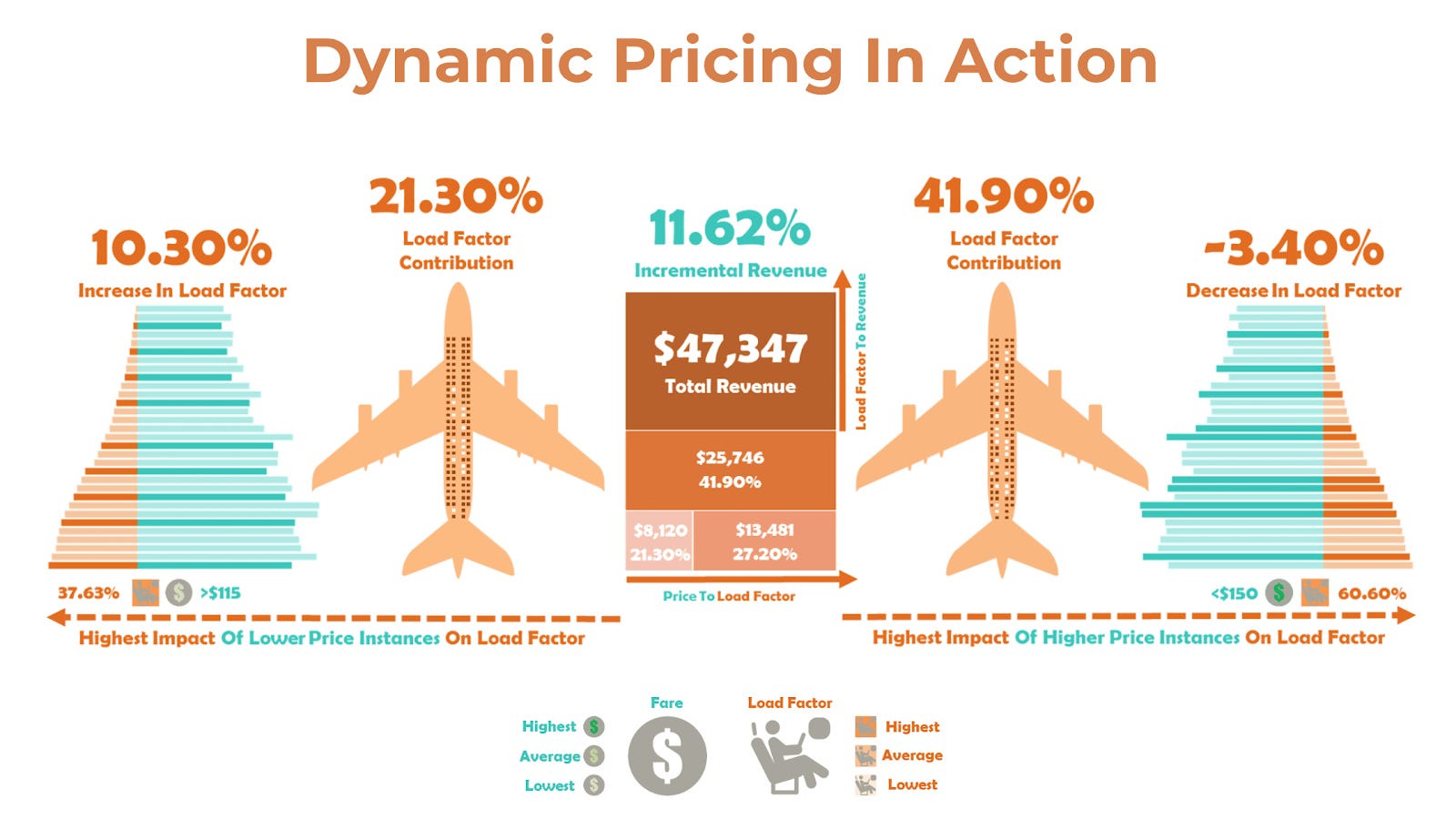
Courtesy: The Algorithm behind plane ticket prices and how to get the best deal, Kiera Shepard, Illumin Magazine, July 1, 2019
_____________________________________________________________________
______________________________________________________________________
Here are some smart strategies to find the best airline fares despite dynamic pricing algorithms:
🕰️ 1. Book at the Right Time
Best window: 📅 6 to 8 weeks before domestic flights and 2 to 4 months before international ones.
Day of the week: 🗓️ Tuesday and Wednesday are often cheaper for booking, while flying on Tuesdays, Wednesdays, or Saturdays tends to be cheaper.
Time of day: 🌅 Search in the early morning or late at night when fewer people are booking.
🔍 2. Use Fare Comparison Tools
Check multiple platforms like Google Flights, Skyscanner, Kayak, and Hopper.
Set price alerts to get notified when fares drop.
🌐 3. Search Smartly
Use incognito mode or clear cookies to avoid price hikes based on repeated searches.
Search for one-way tickets instead of round trips to find hidden fare combinations.
🎛️ 4. Be Flexible
Flexible dates: Shifting by a day or two can reveal cheaper fares.
Nearby airports: Consider flying into or out of alternate airports.
✈️ 5. Book Strategically
Hold fares: Some airlines let you hold a fare for 24 hours without paying.
Split bookings: If traveling with others, search for 1 ticket at a time—group bookings can raise the price.
💳 6. Maximize Discounts & Rewards
Use airline miles, credit card rewards, and loyalty programs.
Check for discounts through student, senior, or corporate programs.
________________________________________________________________
Here are some of the best tools to track airline fares and get alerts when prices drop:
Google Flights
Set price alerts for specific routes and dates.
Shows a price trend graph and suggests if it's a good time to book.
Tip: Use the "Explore" feature for flexible travel ideas.
Allows price alerts for specific routes.
Great for flexible date searches and nearby airport options.
Price alerts and historical trends.
“Hacker fares” combine one-way tickets from different airlines for savings.
Hopper (App only)
Uses AI to predict if fares will rise or fall.
Notifies you when it's the best time to book.
📉 Fare Tracking Websites
Going (Formerly Scott’s Cheap Flights)
Sends alerts for mistake fares and significant discounts.
Premium version offers more frequent alerts.
Tracks fares and special airline sales.
Great for finding limited-time deals.
FareDrop (App and Website)
Created by travel influencers Kara and Nate.
Personalized alerts based on your home airport.
🛠️ Bonus Tools
ITA Matrix: Powerful for advanced search but doesn’t book tickets directly.
Flighty: Great for tracking live flight status and price changes.
Secret Flying: Highlights error fares and flash sales.
____________________________________________________________________
Here comes the "BOGUS” part of the airline reservation system. Yeah, you read it correctly…bogus not bonus.
Why do some airlines warn that there are only 3 seats left when you end up booking more?
That “Only 3 seats left at this price!” warning is more of a marketing tactic than an actual inventory update. Here’s why it happens:
🎟️ 1. Fare Buckets, Not Total Seats
Airlines divide seats into fare classes or buckets, each with different prices.
When you see "3 seats left," it means only three seats are available at that specific price, not on the entire plane.
If you book more than 3, the system moves your booking to the next available fare bucket, which may be the same price or slightly higher.
🛫 2. Dynamic Pricing in Real Time
Airline algorithms update seat availability constantly based on demand.
Even if the website says 3 seats left, the system might refresh and add more seats to that fare class if demand slows down.
📣 3. Scarcity Marketing Tactic
Airlines and travel sites use scarcity cues to push bookings.
"Only 3 left" creates a sense of urgency, encouraging you to book quickly.
📊 4. Group Bookings & Fare Averaging
If you book, say, 5 tickets and only 3 are left in a lower fare bucket, the system often averages the fare across all 5 tickets rather than splitting them between price classes.
This is similar to stores advertising “Everything in this store must go”, and “Prices start from $5.99”. When you walk into the store you may not find even one for $5.99. Now that they got you into the store, your impulsive part of the brain will kick in and buy things you didn’t need or didn’t come for 🤔
Summary:
Now that you know to some extent how airline pricing algorithms work, please use the tips and tricks presented above to your advantage. If you choose not to use any of these tips, you will end up purchasing tickets at a much higher price. Question: Why pay more, when you are well-informed?
__________________________________________________________________________
____________________________________________________________________________
Disclaimers:
"This content is provided as-is for educational purposes only. While I strive for accuracy, I cannot guarantee that all information is up-to-date or applicable to your circumstances."
"This article represents my personal opinions and interpretations. Readers are encouraged to think critically and form their conclusions."
If every one knows the method then it becomes a zero sum game
Good information